Senior Living Enrichment Programs Transforming Daily Life
What Enrichment Really Means in Senior Living Today
Older adults entering a community in 2026 expect more than safety and attractive décor. They want days filled with purpose, choice, and growth. As a result, “enrichment” has expanded from a few scheduled activities to a comprehensive strategy that touches every department and every resident. This overview breaks down how leading operators are redefining enrichment and why it matters for health, happiness, and occupancy.
From Amenities to Meaningful Engagement
For years, facility tours focused on sparkling lobbies and gourmet menus. Those features still matter, but surveys now show that prospective residents and their families ask deeper questions:
- How will my talents be used here?
- What opportunities exist to keep learning?
- Can I contribute to causes I care about?
Communities answering those questions directly—by letting residents lead woodworking classes, host podcasts, or mentor local students—are seeing stronger move-in rates and longer lengths of stay. The building becomes a living classroom rather than a hotel with healthcare.
The Four Pillars of Holistic Enrichment
Modern programs weave together physical, cognitive, social, and spiritual elements. Balance is key; neglecting one pillar weakens the whole structure.
1. Purpose and Contribution
Residents thrive when they feel useful. Popular approaches include:
- Resident-run clubs (gardening, coding, foreign language)
- Volunteer partnerships with schools and charities
- Intergenerational projects that pair elders with college interns
2. Physical Vitality
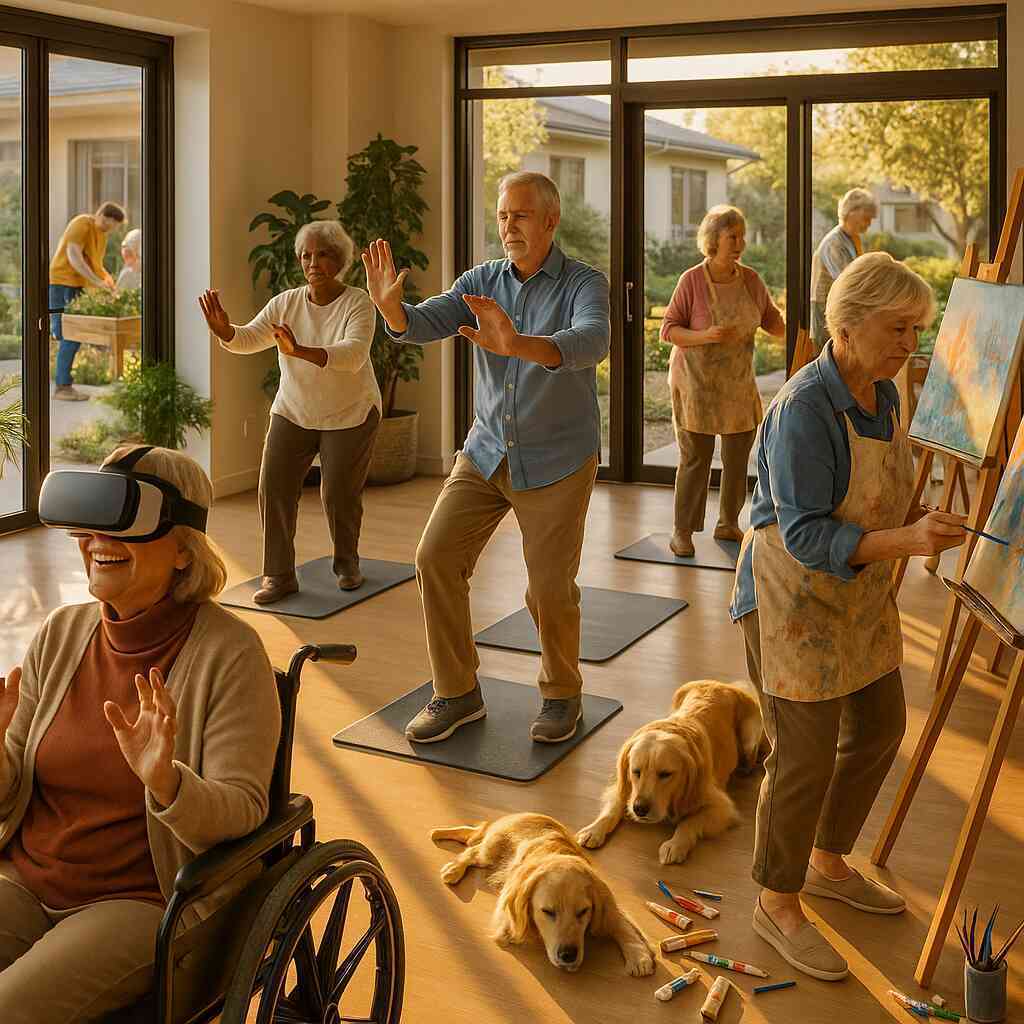
Adaptive fitness coaches tailor movement to individual biomechanics—think resistance-band circuits for arthritis or chair yoga for prosthetics. Outdoor options such as walking meditation paths or rooftop tai chi add sensory stimulation and vitamin D, both linked to reduced fall risk.
3. Cognitive Stimulation
Brain fitness is no longer limited to crossword puzzles. Communities now integrate:
- Philosophy circles led by retired professors
- Robotics and 3-D printing workshops in maker spaces
- Virtual-reality travel sessions that spark memory recall
4. Emotional and Spiritual Wellness
Storytelling circles, mindfulness classes, and music therapy nurture belonging and resilience. Residents often report lower stress and stronger friendships after consistent participation.
Designing a Modern Enrichment Program
Building these experiences requires coordination, data, and a culture that supports experimentation.
Listen First
- Conduct structured interest interviews during move-in and again every six months.
- Use short surveys to learn how residents felt about last month’s events.
Build Flexible Spaces
- Turn underused rooms into multipurpose studios that can host art in the morning and a podcast in the afternoon.
- Equip outdoor areas with shade structures, raised garden beds, and smooth walking paths for mobility devices.
Train and Empower Staff
- Cross-train caregivers and dining teams so they can support events on the fly.
- Reward employees who pilot new ideas, such as a bilingual poetry night or drone-flying club.
Leverage Community Partnerships
- Libraries supply guest lecturers.
- Universities place interns for technology tutoring.
- Local theaters offer their stages for resident productions.
Collaboration expands programming without over-stretching payroll and shows families that the campus is fully integrated with its neighborhood.
Measuring Impact on Health and Occupancy
Forward-thinking operators treat enrichment as a clinical and financial lever, not entertainment alone. Simple metrics make a difference:
- Participation rates by neighborhood or care level
- Fall incidents correlated with fitness attendance
- Medication usage before and after meditation programs
- Average length of stay compared with regional benchmarks
Dashboards help leadership redirect resources quickly—for example, extending greenhouse hours when horticulture therapy proves especially popular.
Real-World Outcomes Reported by Operators
While every community is unique, many leaders share similar gains after adopting purpose-driven enrichment:
- Fewer emergency transfers linked to improved strength and balance
- Higher Net Promoter Scores because families see loved ones teaching, creating, and laughing
- Reduced marketing spend as word-of-mouth referrals grow
A Look Ahead
The next evolution may come from technology that personalizes experiences even further—wearables that suggest stretch breaks, AI tools that translate dialects during storytelling, or holographic concerts featuring a resident’s favorite era. Yet the heart of enrichment will remain human: honoring each person’s story and giving them room to shape what comes next.
Communities that commit to this philosophy position themselves as more than residences. They become places where older adults continue to build legacies, mentor younger generations, and wake up each morning knowing they still matter. That is the true meaning of enrichment in senior living today.
What Does Enrichment Mean at Senior Living Facilities Today


Comments
Post a Comment