Smart Tech Roadmap for Senior Living Communities 2026
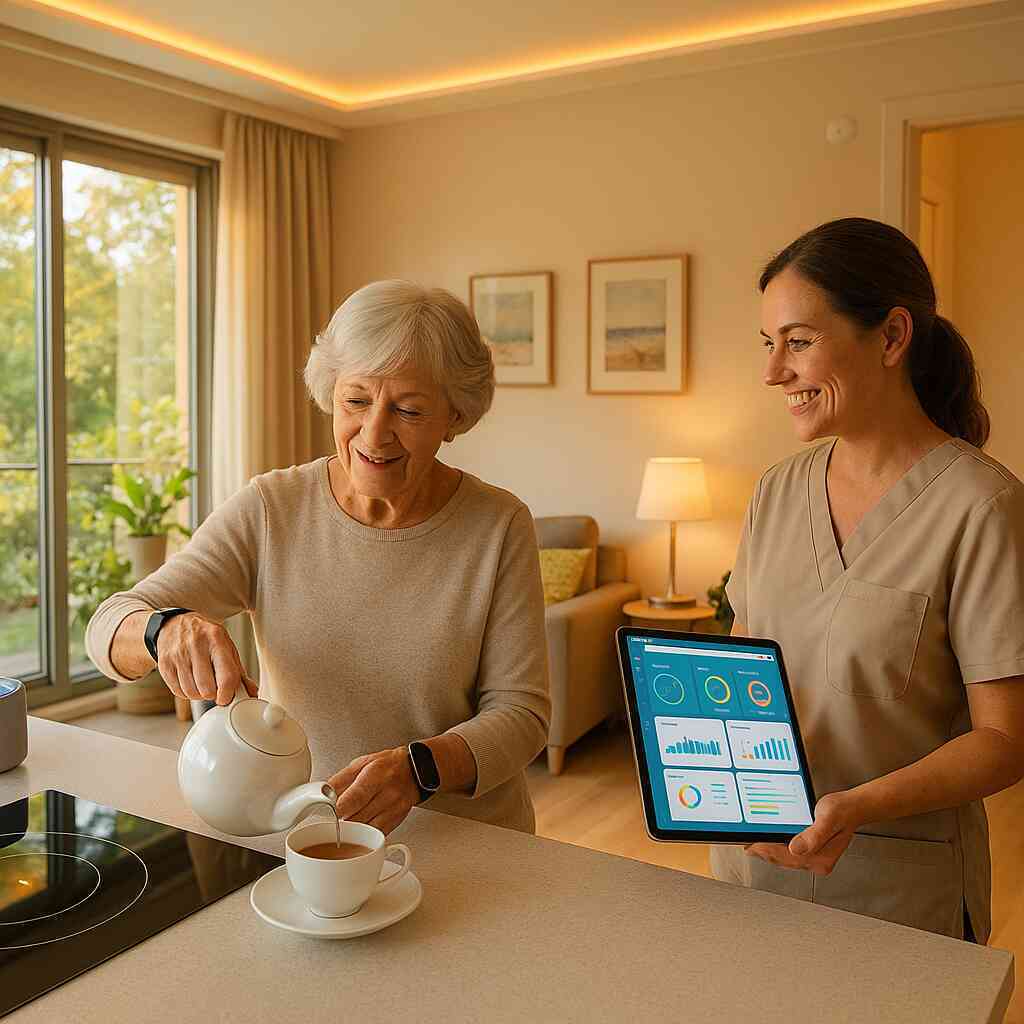
Smart Tech Roadmap for Senior Living Communities 2026
Connected devices are reshaping today’s senior living market. From fall-detection wearables to AI-driven medication reminders, technology now sits at the center of safe, dignified aging. This guide breaks down the practical steps a community can follow to evaluate, install, and maintain smart solutions that truly improve resident life in 2026.
Why Smart Technology Matters More Than Ever
- Safety that scales. Real-time location tracking, automatic stove shut-offs, and voice-activated emergency calls reduce response times and lower risk.
- Data-driven care. Continuous vitals monitoring feeds electronic health records, letting nurses intervene before a small issue becomes an ER visit.
- Family trust. Secure family portals provide status updates and event photos, showing loved ones the community’s daily commitment to wellbeing.
- Competitive edge. Prospective residents increasingly shortlist properties that advertise reliable Wi-Fi, telehealth access, and modern room controls.
Map the Digital Journey From Independent Living to Assisted Care
Smart adoption works best when it follows a staged plan instead of ad-hoc purchases.
Stage 1: Foundation in Independent Living
- Enterprise-grade wireless network with campus-wide coverage
- Smart thermostats and lighting for energy savings and comfort
- Passive motion sensors to flag potential falls or missed meals
Stage 2: Integrated Supports in Assisted Living
- Bluetooth or cellular wearables that detect falls and irregular heart rates
- Voice assistants that manage reminders and reduce isolation
- Central dashboard for caregivers to receive real-time alerts
Stage 3: Predictive, Whole-Campus Care
- Machine-learning analytics that spot patterns across hundreds of data points
- Interoperable electronic health record feeds to physicians and pharmacies
- Policy frameworks that guide proactive rather than reactive care plans
Designing with stages in mind prevents expensive rip-and-replace projects. Infrastructure installed for today’s smart lighting can later support tomorrow’s digital therapeutics.
Build the Invisible Infrastructure First
1. Robust, Redundant Wi-Fi
Senior communities handle both entertainment streaming and medical telemetry. Prioritize:
- Dual-band or tri-band access points with dynamic bandwidth allocation
- Self-healing mesh to reroute traffic during an outage
- Separate SSIDs that give clinical data precedence over resident Netflix sessions
2. Reliable Backhaul
Fiber rings or point-to-point microwave links provide low-latency campus coverage. Automatic cellular failover keeps telehealth visits live even if the main provider experiences downtime.
3. Continual Monitoring
Dashboards that display packet loss, device status, and intrusion attempts let IT teams act before residents notice an issue.
Keep Cybersecurity Non-Negotiable
Seniors deserve privacy and protection. Follow these proven practices:
- Conduct third-party penetration tests at least twice per year.
- Enforce role-based access controls—nurses see medical data, maintenance sees HVAC panels.
- Require multi-factor authentication on all administrator accounts.
- Encrypt data both in transit (TLS 1.3) and at rest (AES-256).
- Document an incident-response plan that defines who acts within the first five minutes of a breach.
Transparent communication builds resident trust. Post high-level summaries of security audits and clarify how personal information is used.
Align Technology With Resident Expectations
Baby boomers arrive with smartphones in hand and specific standards for usability:
- Invisible interfaces. Motion-sensing lights and voice commands feel natural; clunky keypads do not.
- Human support. Offer small-group “tech cafés” where residents learn new features alongside a peer mentor.
- Choice and control. Always give an opt-out path for sensors in private bedrooms. Autonomy remains paramount.
Involve Staff Early and Often
A rollout succeeds only when frontline caregivers feel confident.
- Demo devices in a staff lounge weeks before go-live.
- Create cheat-sheet cards that show how to silence, escalate, or document an alert.
- Schedule follow-up sessions after 30 days to capture feedback and fine-tune workflows.
When employees see technology as a tool—not an extra task—adoption rates soar.
Evaluate Vendors With a Five-Point Checklist
- Interoperability. Does the solution use open APIs and standard data formats?
- Scalability. Can one building’s pilot expand to an entire campus without forklift upgrades?
- Usability. Are resident and staff interfaces intuitive after minimal training?
- Support. What are average ticket response times and on-site service options?
- Evidence. Request case studies that show measurable improvements, such as reduced falls or shorter hospital stays.
Measure Success With Clear Metrics
Use objective numbers to show stakeholders that an investment is working:
- Fall rate per 1,000 resident days
- Average response time to an alert
- Resident satisfaction survey scores for feelings of safety and independence
- Network uptime percentage across clinical SSID
Publishing quarterly scorecards keeps leadership aligned and highlights where additional training or hardware is needed.
Plan for the Next Wave of Innovation
While no one can predict every breakthrough, trends already emerging include:
- Digital therapeutics that deliver cognitive games or pulmonary rehab programs personalized to each resident.
- Ambient computer vision that anonymously tracks gait changes, signaling a higher fall risk before the first slip.
- Intergenerational portals that merge virtual reality field trips with family video calls, reducing loneliness.
By maintaining robust network capacity and open integrations today, a community stays ready for tomorrow’s advances without disruption.
Key Takeaways
- A staged roadmap—foundation, integration, prediction—avoids costly missteps.
- Enterprise-grade Wi-Fi and security controls are the non-negotiable backbone.
- Success hinges on human factors: resident autonomy, staff confidence, and transparent data practices.
- Clear metrics validate progress and guide continuous improvement.
Digital transformation in senior living is not about gadgets for gadgets’ sake. It is about creating safer, happier, and more connected homes for older adults while empowering caregivers with actionable insight. Communities that follow this roadmap position themselves at the forefront of compassionate, data-driven care in 2026 and beyond.
Guide to Smart Tech Adoption at Senior Living Facilities 2026


Comments
Post a Comment