Telehealth in Senior Living Facilities: 2026 Comparison
Why Telehealth Is Now the Front Door of Senior Living
The idea of seeing a doctor from a comfy recliner once felt futuristic. In 2026, video-based care is an everyday expectation for older adults. Communities that streamline telehealth gain a clear edge on safety, satisfaction, and staffing—three issues that keep families up at night. This overview compares the main technologies, explains how they fit into daily operations, and offers practical checkpoints for evaluating a community’s virtual-care readiness.
Key Terms at a Glance
- Telemedicine – A real-time clinical visit (often video) between resident and licensed clinician.
- Telehealth – A broader umbrella that includes telemedicine plus remote therapy, health coaching, and digital education.
- Remote Patient Monitoring (RPM) – Connected devices that transmit vitals such as heart rate, blood glucose, or oxygen saturation to a secure dashboard watched by nurses and physicians.
- Digital Health Platform – The software layer that stitches video, messaging, EHR access, and billing into one workflow.
Grasping these distinctions helps families match a loved one’s health profile with the right technology mix.
Why Virtual Care Became Table Stakes
- Resident Expectations – Older adults use smartphones for banking and shopping. They now expect the same convenience for health.
- Workforce Shortages – By routing routine follow-ups online, onsite nurses focus on hands-on caregiving rather than transportation and paperwork.
- Reimbursement Parity – Medicare pays for many telehealth visits at the same rate as in-office care, turning virtual encounters into a financial protector instead of a cost center.
- Emergency Reduction – Early detection through RPM often catches issues before they escalate, cutting avoidable hospital transfers.
The result: virtual care is no longer a shiny add-on; it is a risk-management and lifestyle essential.
Core Telehealth Modalities in Senior Housing
1. Scheduled Video Visits
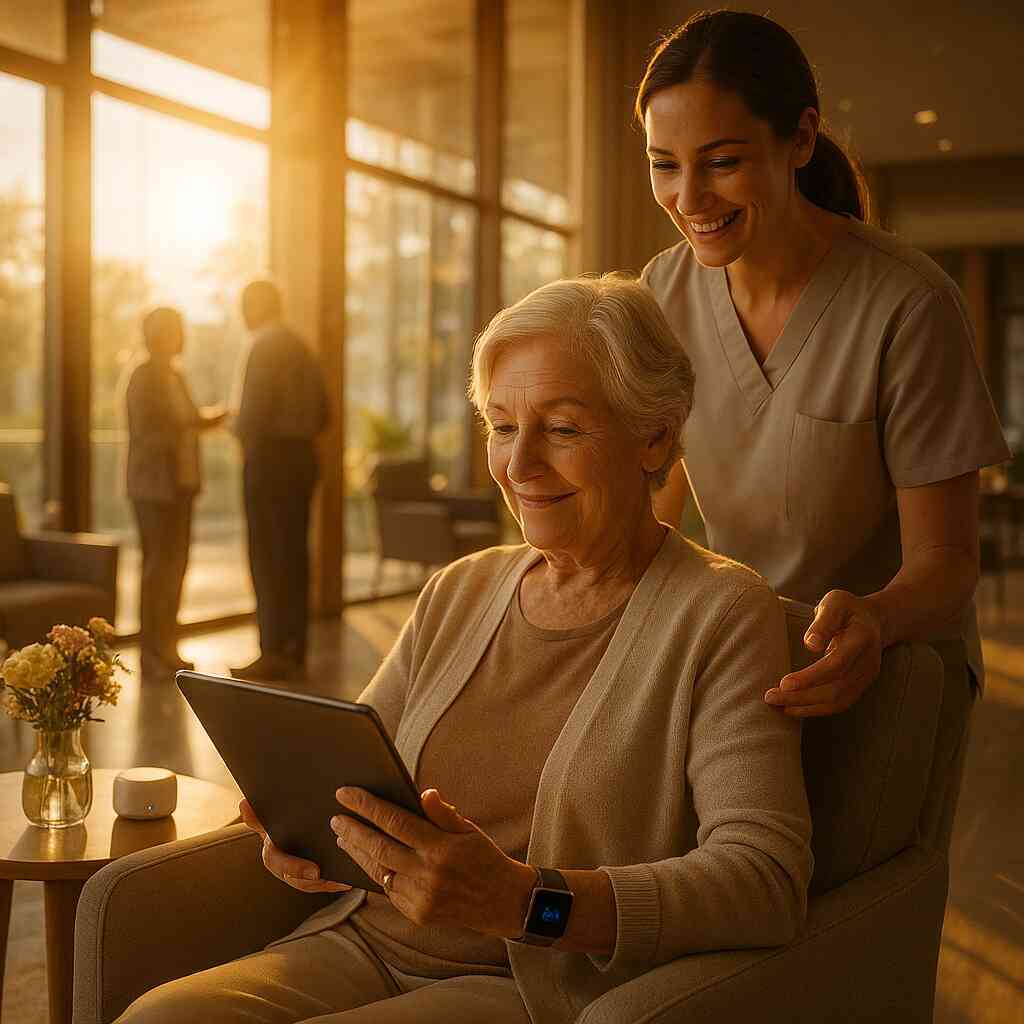
Residents open a tablet and connect with their primary-care or specialty provider. Communities with reliable Wi-Fi and private telehealth suites complete these visits without leaving the building, protecting frail individuals from weather, infection exposure, and travel fatigue.
2. Tele-Hospitalist Coverage
Some communities partner with regional hospitals so residents are seen virtually by a board-certified hospitalist during overnight hours. This model provides rapid clinical decisions when local physicians are off-site, often avoiding an ambulance ride.
3. Remote Patient Monitoring Stations
Bluetooth or cellular devices capture weight, blood pressure, blood sugar, or pulse oximetry. Data flows into a dashboard that flags out-of-range results for immediate nurse follow-up. For chronic conditions such as heart failure or COPD, RPM is a game-changer.
4. Digital Therapy and Social Connectedness
Physical, occupational, and speech therapists run guided sessions over video, while group exercise platforms keep residents moving. Mental-health apps supply counseling or mindfulness classes, combating isolation—still one of the biggest predictors of decline.
Comparing Communities: Seven Questions to Ask
- How strong and redundant is the Wi-Fi?
- Look for enterprise-grade networks with battery and generator backup.
- Which clinicians provide virtual coverage?
- Verify credentials and whether they coordinate with the resident’s existing physicians.
- Is the platform fully HIPAA compliant?
- Ask about encryption, role-based access, and audit trails.
- Does telehealth integrate with the community’s EHR?
- Seamless data flow prevents medication or allergy errors.
- What is the staff training plan?
- Successful programs include repeat hands-on training, not just a one-time demo.
- How are families kept in the loop?
- Portals that allow approved relatives to view visit summaries build trust and transparency.
- What devices are supplied and who pays?
- Clarify whether tablets, wearables, or RPM kits are included in the monthly fee or billed separately.
Documenting answers to these questions turns an emotional search into a structured comparison.
Practical Benefits for Residents and Families
- Faster Symptom Management – A rash or urinary-tract infection can be reviewed the same day, often avoiding progression to an emergency.
- Reduced Travel Stress – No more loading fragile wheelchairs into vans for a five-minute script renewal.
- Continuous Insight for Families – Real-time updates through secure portals calm the “how is Mom today?” anxiety that drives countless phone calls.
- Greater Independence – Prompt care lets residents remain active in community events instead of spending days recuperating from exhausting clinic visits.
Operational Wins for Community Operators
- Higher Staff Efficiency – Every virtual follow-up saved equals more direct care minutes on the floor.
- Better Occupancy and Market Appeal – Prospective residents increasingly rank telehealth alongside dining and activities on their must-have list.
- Data-Driven Quality Metrics – RPM trends feed directly into quality-improvement programs and state reporting.
- Revenue Protection – With Medicare parity, communities capture legitimate reimbursement while avoiding the cost of medically unnecessary transports.
Common Implementation Pitfalls (and Fixes)
- Insufficient Change Management
- Fix: Involve frontline caregivers early; appoint tech ambassadors on each shift.
- Overlooking Resident Usability
- Fix: Choose interfaces with large fonts, voice prompts, and one-touch call buttons.
- Forgetting the Privacy Factor
- Fix: Create dedicated telehealth rooms or cart systems with privacy screens and headphones.
- Treating Telehealth as a Side Project
- Fix: Make virtual care part of the standard care plan, not an optional extra.
The Road Ahead
Artificial intelligence is already triaging symptom reports and suggesting next steps for nurses. Wearables the size of a bandage stream continuous vitals, alerting staff to falls or irregular heart rhythms. Yet the heart of senior care remains human connection. The communities that thrive in 2026 will balance cutting-edge digital tools with the warmth of a familiar face at the bedside.
Takeaway
Telehealth in senior living facilities has matured from emergency workaround to foundational service. Families comparing options should assess network strength, clinical partnerships, data security, and the resident experience. When those elements align, virtual care does more than treat illness—it preserves freedom, eases worried minds, and supports staff who give their all every day.
A thoughtful evaluation today ensures the technology at the front door truly opens into a safer, more connected home for tomorrow.
Compare Telehealth in Senior Living Facilities Today


Comments
Post a Comment