Wellness Tech Redefines Care in Modern Senior Living
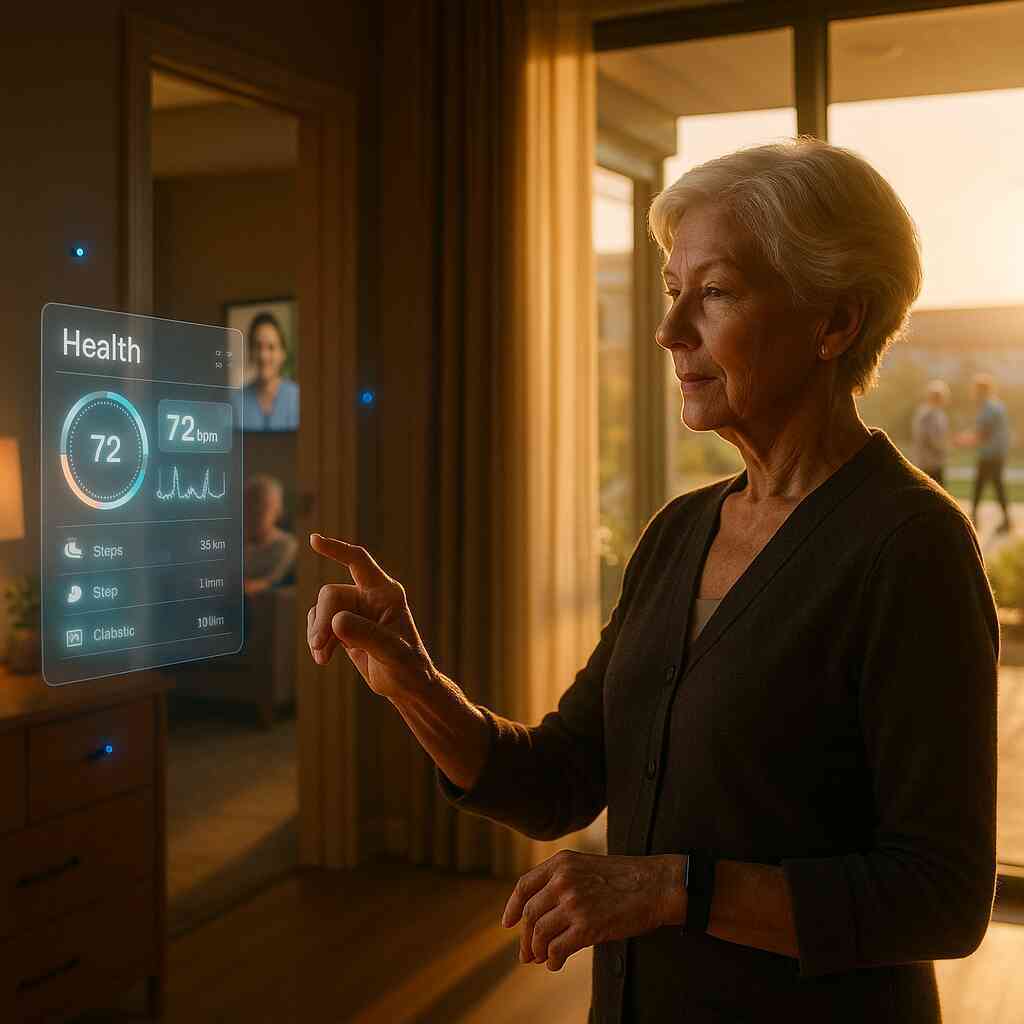
Moving From Call Buttons to Predictive Wellness
Wellness technology in senior living has evolved far beyond the familiar pull-cord or pendant. Today’s systems weave sensors, cloud analytics, and smart-home devices into a proactive safety net that spots small changes—like rising heart rate or disturbed sleep—well before they become emergencies. This overview explains how that shift works and what it means for residents, families, and community operators in 2026.
What Counts as “Wellness Tech”?
Wellness technology is best viewed as an ecosystem rather than a single gadget. Key components include:
- Connected sensors that measure movement, gait, temperature, and even hydration.
- Wearables and smart watches that synchronize heart rate, oxygen saturation, and step counts to a central dashboard.
- AI-driven analytics that flag subtle deviations from each resident’s baseline.
- Voice-activated assistants that let residents request help, adjust lights, or join a social event schedule without lifting a phone.
- Electronic medication management that tracks adherence and prompts refills.
- Smart-home infrastructure—lighting, HVAC, blinds—that adapts automatically to support comfort and fall prevention.
Grouped together, these tools serve physical, cognitive, and social well-being rather than treating isolated conditions.
Why the Shift Matters
Traditional emergency systems are reactive; they summon aid after a fall or acute episode. New platforms lean on continuous data to predict risk and enable early intervention. Benefits include:
- Fewer hospital transfers: Catching dehydration or a urinary-tract infection a day earlier often prevents an ER visit.
- Greater resident autonomy: People can live without constant staff check-ins because technology monitors discreetly in the background.
- Family peace of mind: Secure portals let loved ones view trend lines—sleep, steps, heart rate—without intrusive phone calls.
- Personalized care plans: Clinicians see which exercise classes improve mobility for each resident and adjust schedules accordingly.
Inside the Digital Care Ecosystem
1. Internet of Things Sensors
Bed sensors detect changes in nighttime movement; bathroom fixtures estimate hydration; gait trackers note speed and stride length. All data flows to a central platform that learns each resident’s normal range and alerts staff when readings drift.
2. Smart-Home Automation
Lighting that brightens gradually in the morning supports circadian rhythms. Thermostats compensate for slower temperature perception common in older adults. Motorized blinds cut glare that can trigger falls. Residents control everything by voice or a large-type tablet, reducing the need to fumble with switches.
3. Predictive Analytics Dashboard
An algorithm scores daily wellness on a simple green-yellow-red scale. Yellow may show mild weight gain and fragmented sleep—early markers for heart failure—prompting a nurse to check in. Red signals call for immediate assessment. Because the system learns continuously, false alarms decline over time.
4. Integrated Clinical Workflows
Data doesn’t stop at the dashboard. It feeds electronic health records, meal-planning software, and rehabilitation schedules so every department works from the same source of truth.
Practical Steps for Communities Adopting Wellness Tech
- Start with a pilot unit: Prove reliability, resident comfort, and network stability before scaling.
- Prioritize cyber-security: Use encrypted gateways and role-based access to protect personal health information.
- Focus on staff training: A predictive alert is only valuable when someone understands and acts on it.
- Educate residents and families: Demystify sensors and AI so everyone sees the value rather than fearing surveillance.
- Measure ROI holistically: Balance reduced hospitalizations against upfront hardware costs and ongoing support.
Resident Experience: A Day in a Smart Apartment
- 6:30 a.m. Circadian lights fade up; the bed sensor notes a restful night.
- 7:00 a.m. The bathroom mirror displays hydration status, prompting an extra glass of water.
- 9:00 a.m. A wearable detects slower gait and suggests a gentle stretch video on the TV.
- 3:00 p.m. A voice prompt reminds about medication. The e-MAR records compliance automatically.
- 9:30 p.m. Thermostat lowers slightly to assist deep sleep; motion sensor turns on a soft path light to the bathroom.
Throughout the day, caregivers see real-time data but visit only when metrics warrant hands-on help, preserving privacy and independence.
Common Questions
Is the technology intrusive? Most sensors blend into furniture or clothing and transmit data silently. Residents can opt out of features they find uncomfortable.
What happens if Wi-Fi fails? Top platforms include cellular or mesh backups, and critical alerts also route through legacy call systems.
Does this replace human caregivers? No. It augments staff by flagging needs earlier and freeing time for high-touch interactions.
Looking Ahead
As machine learning models mature, expect more precise predictions—such as identifying a 72-hour window before a fall risk peaks. Digital therapeutics delivered through tablets may personalize brain-training games or breathing exercises based on real-time vitals. The goal is not futuristic gadgetry for its own sake but a safer, richer, and more self-directed lifestyle for older adults.
Key Takeaways
- Wellness tech now centers on prediction, not just response.
- An integrated ecosystem—sensors, automation, analytics—creates a holistic safety net.
- Successful implementation hinges on security, staff training, and resident education.
- The result is fewer crises, more autonomy, and stronger family confidence.
By understanding these elements, senior living communities can move from merely housing older adults to empowering them with data-driven well-being.
What Does Wellness Tech Mean at Senior Living Facilities


Comments
Post a Comment