Biophilic Design in Senior Living: Light, Air, and Greenery
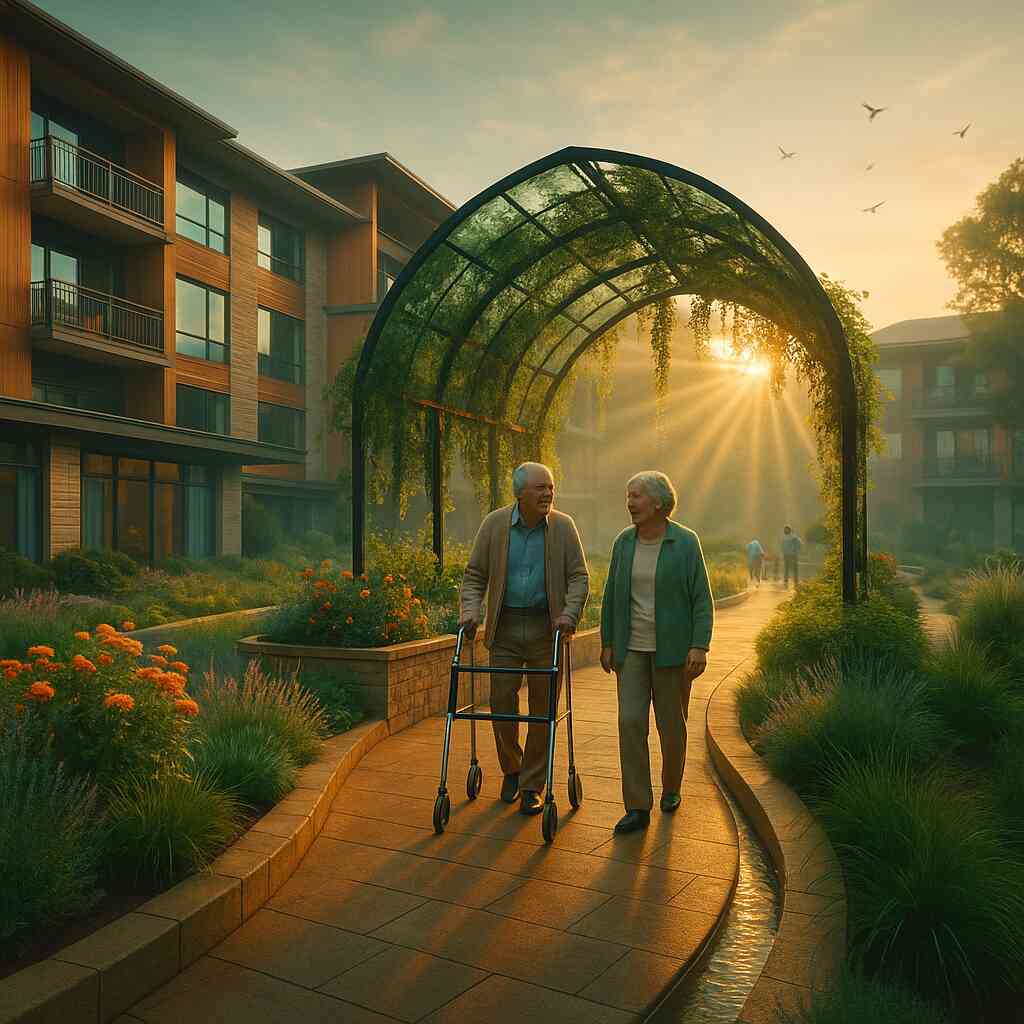
Biophilic Design in Senior Living Facilities
The term biophilic design refers to shaping buildings so residents feel closely connected to nature. In a senior living setting this approach is more than aesthetic; it supports physical health, regulates mood, and encourages social interaction. This guide explains the core ideas, why they matter in 2026, and how communities can apply them effectively.
What Makes Design “Biophilic”?
Biophilic environments weave natural elements—sunlight, fresh air, water, vegetation, and organic forms—into everyday spaces. The goal is to evoke the same calm, restorative response the brain experiences while walking through a park. Done well, the design becomes a passive wellness intervention that works around the clock.
Typical Biophilic Features
- Generous daylight from skylights, clerestories, or light wells
- Interior gardens, green walls, and potted plant groupings
- Views to courtyards, ponds, or treetop canopies
- Natural materials such as wood, stone, and cork underfoot
- Subtle references to local landscapes in artwork and textures
Why Older Adults Benefit Most
Older adults spend a larger share of time indoors and may have limited mobility. This amplifies the health impact of built surroundings. Key advantages of biophilic design for seniors include:
- Circadian support – Exposure to balanced daylight cues sleep–wake cycles, which can reduce sundowning and improve overall rest.
- Stress reduction – Green views and soft natural sounds lower cortisol, easing anxiety and blood pressure.
- Cognitive engagement – Gardens and bird-friendly patios provide low-stakes discovery moments that stimulate memory and conversation.
- Air quality – Plants add mild humidity and filter airborne pollutants, easing dry skin and respiratory discomfort common in older populations.
Core Principles to Guide a Project
1. Prioritize Natural Light
Design corridors and suites so daylight reaches at least two sides of a room. Glare control is critical for aging eyes, so pair skylights with diffuse shades or light-shelf geometry.
2. Encourage Fresh Air Flow
Operable windows, vented clerestories, and covered balconies let residents enjoy breezes without leaving the safety of staff-monitored areas. Even brief ventilation flushes can reduce pathogen load and odors.
3. Layer Living Greenery
Use a mix of potted trees, wall planters, and tabletop herbs to create "living layers." Select low-maintenance, non-toxic species—philodendron, dracaena, peace lily—that thrive in varied light and humidity levels.
4. Offer Sensory Gardens for Memory Care
Inside dementia care wings, design small, contained courtyards with looped walking paths, raised vegetable beds, and tactile plants such as lamb’s ear or rosemary. Familiar scents and textures can anchor short-term memories and reduce exit-seeking behaviors.
5. Support Safe Access to the Outdoors
Level thresholds, handrails, and slip-resistant pavers make it easy for mobility-aid users to transition outside. Shade trellises and pergolas lower heat stress so time outdoors remains comfortable throughout the day.
Practical Features Residents Notice First
- Window seats overlooking bird feeders or flowering shrubs
- Indoor water elements that supply gentle white noise without creating slip hazards
- Sunrooms positioned to capture morning light for reading or tai chi
- Edible landscapes—blueberry bushes, dwarf citrus, or herb spirals—so residents can harvest a taste of home
- Multi-sensory art installations using live moss panels or driftwood sculptures
Tailoring Design to Regional Climate
Biophilic strategies succeed when they respect local conditions rather than copy trending imagery:
- Rain-prone regions may enclose winter gardens under translucent roofs so residents garden year-round.
- Arid climates can showcase native xeriscape plantings that support pollinators without heavy irrigation.
- Coastal locations often select salt-tolerant grasses and add elevated boardwalks for safe storm-water passage.
Measuring the Impact: Beyond Aesthetics
Operators increasingly treat nature access as a measurable health asset. Common metrics include:
- Average daylight levels in resident suites
- Sleep duration and nighttime call-light frequency
- Self-reported stress or mood scores
- Medication trends for anxiety or insomnia
- Participation rates in outdoor or garden programs
Collecting simple pre- and post-occupancy data builds a case for continued investment and helps refine future renovations.
Implementation Tips for Administrators
- Start small. Even a single sunlit lounge converted to a plant-rich “living room” can demonstrate value before large-scale capital projects.
- Involve residents early. Ask about favorite plants, memories of childhood gardens, or preferred seating heights. Their stories guide more meaningful design choices.
- Train maintenance teams. Horticultural care is different from routine custodial tasks. Clear watering plans and pest-management protocols protect both plants and residents.
- Balance technology and nature. Automated skylight blinds, humidity sensors, and LED grow lights keep conditions stable without constant staff input.
Key Takeaways
- Biophilic design aligns the built environment with humans’ inherent need for nature, making senior communities healthier and more uplifting.
- Light, air, and greenery work together to regulate circadian rhythms, reduce stress, and encourage gentle movement.
- Strategies range from simple planter groupings to full rooftop gardens; all can be phased in over time.
- Gathering data on sleep, mood, and engagement helps quantify benefits and justify ongoing investment.
Biophilic principles remind us that senior living is not just about four safe walls—it is about creating places where people continue to feel alive, curious, and connected to the wider ecosystem.
What Does Biophilic Design Mean in Senior Living Facilities


Comments
Post a Comment