Designing Memory Care Layouts for Supportive Senior Living
Purpose-Built Spaces That Protect Dignity
Modern memory care design has moved far beyond the long hallways and fluorescent lights that once defined nursing homes. Communities now focus on household-style layouts that feel familiar, encourage independence, and still meet rigorous safety standards. This overview looks at the key design principles shaping memory care neighborhoods in 2026 and explains why thoughtful architecture is as important as a skilled care team.
From Institutional to Intimate
Traditional skilled-nursing wings clustered dozens of residents around a central nurse station. Although efficient for staff, the configuration overwhelmed people with cognitive loss. Today, most projects favor small “households” of 10–16 suites grouped around a shared kitchen, living room, and porch. Benefits include:
- Short walking distances that reduce fall risk and fatigue.
- Fewer visual distractions, lowering agitation and wandering.
- A setting that feels like a real home, supporting social bonds among residents and staff.
When several of these households sit within a larger senior campus, couples with different care needs can stay close, and residents still enjoy amenities such as fitness studios or art rooms without feeling lost in a crowd.
Way-Finding Is an Invisible Care Partner
People living with dementia rely heavily on environmental cues. A clear floor plan can quietly guide them without constant verbal reminders. Best practices include:
- Unobstructed sight lines from bedroom doors to living areas so residents can immediately see where they need to go.
- Circular wandering paths that allow safe movement without dead ends.
- High-contrast colors on doorframes, handrails, and bathroom fixtures to highlight function.
- Consistent spatial rhythm—evenly spaced windows, repeated ceiling patterns, and matching millwork—help the brain build a reliable mental map.
These elements seem simple, yet they reduce anxiety, late-day confusion, and staff redirection time, all while preserving autonomy.
Sensory Comfort: More Than Décor
A memory-care wing should calm the nervous system. Architects increasingly apply neuro-architecture principles such as:
- Dynamic lighting that shifts from energizing cool tones in the morning to warmer hues in the evening, supporting circadian rhythms.
- Acoustically absorptive surfaces—carpet tiles, acoustic ceiling panels, and fabric wall art—to minimize echo and sudden noises.
- Biophilic touches like indoor plants, water features, and natural wood trim, which studies link to lower cortisol levels.
- Varied textures that invite gentle touch, stimulating sensory processing without overwhelming it.
Together these choices create a backdrop that feels comfortable, not clinical, encouraging residents to engage rather than withdraw.
Safety Seamlessly Integrated
Clinical oversight remains non-negotiable, yet it does not have to dominate the aesthetic. Designers now hide technology in plain sight:
- Discrete ceiling sensors monitor movement patterns to spot fall risk but resemble standard smoke detectors.
- Cabinetry with RFID locks secures medication while looking like ordinary kitchen drawers.
- Emergency call buttons are color matched to wall paint and recessed to avoid an institutional look.
The result is an environment where safety is ever-present yet unobtrusive, preserving resident dignity and family peace of mind.
Staff Workflow Still Matters
Resident-first design cannot ignore caregivers. Sightline studies show that centralized work zones serving two adjoining households let team members stay visible to residents while completing documentation. Additional staff-friendly features include:
- Handwashing sinks at every household entry to promote infection control without extra steps.
- Dual-purpose storage islands that hold supplies on one side and serve refreshments on the other.
- Short, direct routes to private family meeting rooms so difficult conversations occur away from communal areas.
By supporting efficient workflows, the building helps caregivers spend more time in meaningful interaction rather than in back-of-house tasks.
Outdoor Space as a Therapeutic Tool
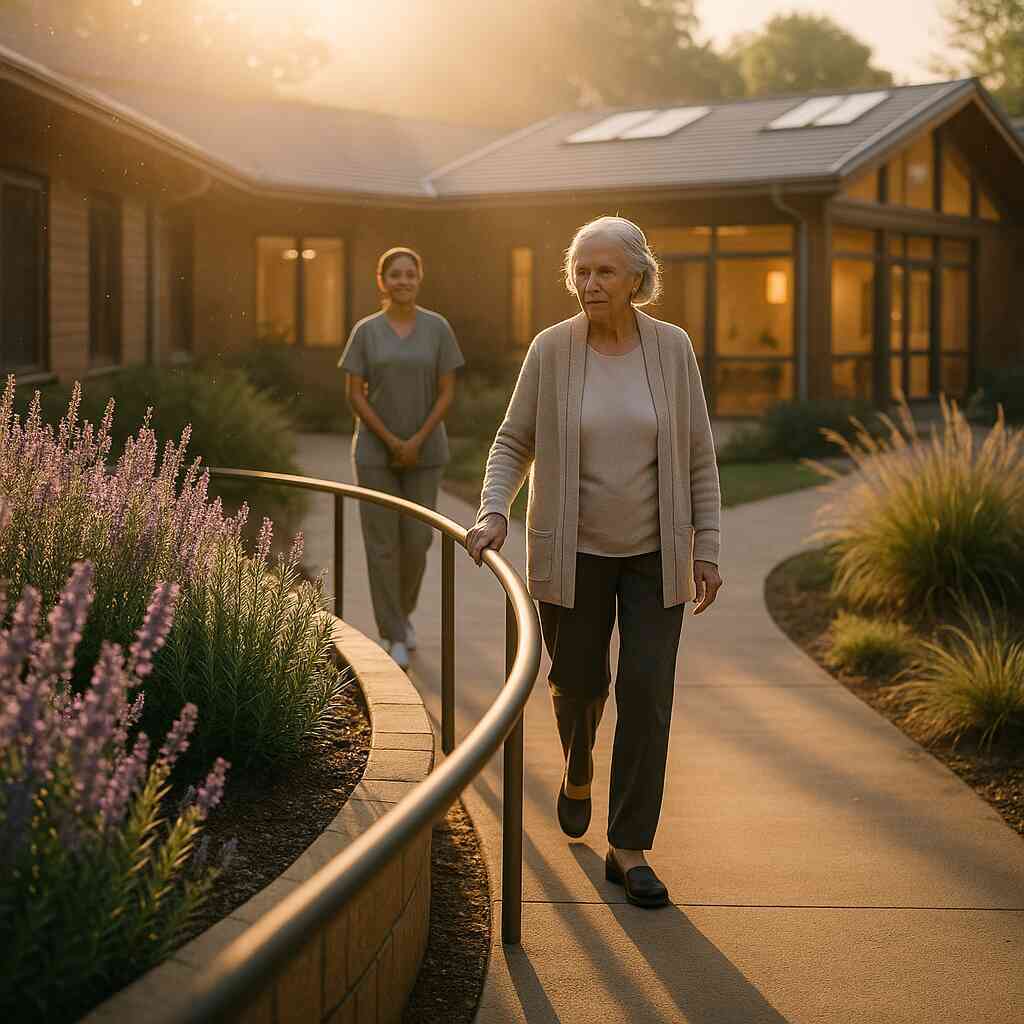
Secure gardens are no longer an afterthought. Landscape architects design looping walking trails with resting niches, raised planters for horticultural therapy, and shaded seating for social visits. Visual landmarks—bird feeders, fountains, or a brightly painted shed—aid orientation. Proper grading and slip-resistant surfaces extend year-round usability, giving residents daily access to fresh air and sunlight, both shown to improve mood and sleep patterns.
Transition-Ready Layouts
Good memory care design anticipates changing needs. Flexible elements include:
- Moveable wall panels to convert a quiet alcove into a nurse workroom if acuity rises.
- Reinforced bathroom blocking so grab bars can be added quickly without opening walls.
- Under-floor conduit that lets communities upgrade sensor networks or nurse-call systems without major disruption.
These provisions protect the owner’s investment and limit resident displacement during future renovations.
Bringing It All Together
An optimal memory care layout balances three objectives:
- Emotional well-being through homelike scale and sensory comfort.
- Physical safety via clear sight lines, secure wandering loops, and integrated technology.
- Operational efficiency so staff can deliver consistent, relationship-centered care.
When those goals align, residents maintain agency, families gain confidence, and staff experience reduced burnout. Architecture becomes a silent partner in care—one that supports dignity every hour of every day.
Key Takeaways
- Smaller, household-style clusters foster familiarity and reduce overstimulation.
- Way-finding cues—contrast colors, rhythmic patterns, and open sight lines—support independence.
- Neuro-architectural elements such as adaptive lighting and biophilic materials calm the nervous system.
- Safety technology can be concealed within residential finishes, avoiding an institutional feel.
- Well-planned back-of-house workflow keeps caregivers present and engaged with residents.
- Flexible infrastructure protects the community’s long-term viability.
Design may not cure dementia, but it profoundly shapes how people live with it. Purposeful layouts transform senior living communities into places where memory loss does not eclipse identity, and where every hallway gently points the way home.
Optimal Memory Care Layouts in Senior Living Facilities


Comments
Post a Comment