Green Roof Senior Housing in NYC: Comfort, Health, Savings
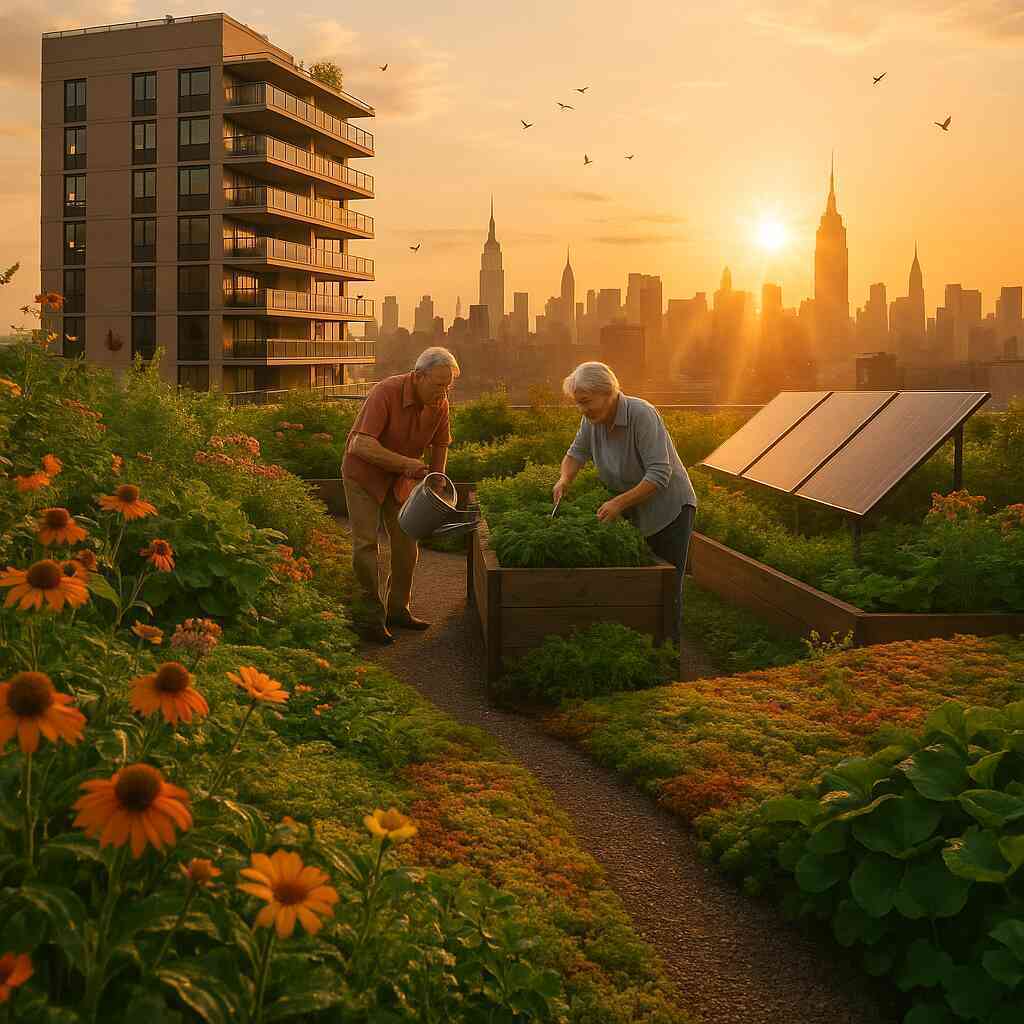
Green Roofs Are Redefining Senior Living in New York
New York City senior living communities are trading bare concrete rooftops for living landscapes. These green roofs give older adults cooler apartments, fresh air, and daily access to nature—without leaving the building. This overview explains why green roofing is becoming a must-have amenity for sustainable senior housing in NYC and what families should know when comparing properties.
Why Green Roofs Suit High-Rise Senior Housing
- Space efficiency. Dense neighborhoods have little ground-level open space. A planted roof turns unused square footage into a garden, walking loop, or therapy zone.
- Climate mandates. Local regulations reward projects that manage stormwater and cut building emissions. Vegetation absorbs rainfall and insulates attics, helping operators meet those targets.
- Resident demand. Today’s retirees expect wellness features, not just medical care. A rooftop greenhouse or herb bed can tip the scales when prospects tour multiple facilities.
Key Health Benefits for Older Adults
Cooler, Safer Summers
Aging bodies struggle to regulate heat. A green roof’s soil and plants absorb sunlight, often dropping peak surface temperatures by 30 °F or more compared with black roofing. Lower heat translates into:
- Reduced risk of heat-related illness
- Fewer emergency HVAC repairs during heat waves
- Comfortable common areas that encourage social interaction
Daily Dose of Nature
Research links even brief exposure to greenery with lower stress, better mood, and improved cognitive performance. In practice, residents use rooftop gardens to:
- Take short walks on level, slip-resistant paths
- Join low-impact exercise or meditation classes
- Tend seedlings for horticultural therapy
Improved Air Quality
Plants filter airborne particles and release oxygen. For seniors with asthma or compromised immune systems, cleaner air can mean fewer respiratory flare-ups and hospital visits.
Operational and Financial Upsides for Operators
Energy Savings Year-Round
Thick soil layers add insulation in winter, while evapotranspiration cools the roof in summer. Studies show HVAC energy use can drop 15–25 %. With New York power costs, the payback period is often under ten years.
Stormwater Fee Reductions
Many municipalities charge buildings for runoff. Vegetated roofs hold rain like giant sponges, trimming those fees and easing pressure on local sewers.
Market Differentiation
Listings that highlight quantifiable green features—substrate depth, plant diversity, kilowatt savings—stand out on comparison platforms. Higher occupancy and stronger resident satisfaction scores can follow.
Design Elements Families Should Look For
| Feature | Why It Matters |
|---|---|
| Accessible layout | Wide paths, shade structures, and elevator proximity let mobility-impaired residents join outdoor activities. |
| Diverse planting palette | Mixing native perennials, sedums, and small shrubs attracts pollinators and ensures color across seasons. |
| Raised planters | Beds at waist height reduce fall risk and make gardening possible from a seated position. |
| Handrails and seating | Continuous railings, benches with arms, and slip-resistant pavers add safety and comfort. |
| Year-round programming | Greenhouses, cold frames, or indoor access points keep the space usable when temperatures drop. |
Maintenance: More Than Watering the Roses
A successful roof garden needs a trained horticulture team and coordination with building engineers. Routine tasks include:
- Quarterly inspections of drainage mats and root barriers
- Seasonal pruning and plant replacement
- Integrated pest management that avoids harsh chemicals
- Structural checks to confirm that added weight remains within load limits
Reputable operators publish maintenance schedules and budgets as part of their annual sustainability reports. Ask to review these documents during your tour.
Comparing Communities: Practical Questions to Ask
- How deep is the growing medium, and what load capacity did engineers certify?
- Is the roof fully wheelchair-accessible, including door thresholds and path gradients?
- What activities—gardening clubs, tai chi, bird-watching—are held on the roof each week?
- Does staff include a certified horticultural therapist or master gardener?
- Can management provide data on HVAC energy savings or reduced stormwater fees since installation?
- How is resident feedback gathered and used to refine programming?
Documented answers indicate that the green roof is a strategic investment, not a decorative afterthought.
The Future: Integrated Eco-Wellness Campuses
Forward-thinking developers are already combining green roofs with solar panels, rainwater harvesting, and indoor hydroponic farms. The goal is a closed-loop building that grows some of its own produce, offsets a portion of its electricity, and supports resident engagement at every step. For seniors, that means:
- Seasonal menus featuring rooftop vegetables
- Workshops on seed starting or composting
- Volunteer opportunities that build purpose and community
As more projects prove the model, lenders and insurers are taking note. Buildings that stay cooler, foster engagement, and reduce risk are simply better long-term investments.
Takeaway
Green roofs transform senior living facilities in New York from vertical shelters into vibrant, climate-resilient communities. They deliver measurable health, comfort, and financial benefits while aligning with citywide sustainability goals. When evaluating options, dig deeper than glossy photos: confirm accessibility, maintenance plans, and real performance data. A well-designed rooftop meadow can be more than a pretty view—it can be a daily lifeline to nature and well-being for the residents who call the building home.
Senior Living Facilities New York Integrate Green Roofs


Comments
Post a Comment