How to Assess Senior Living Dining Program Quality
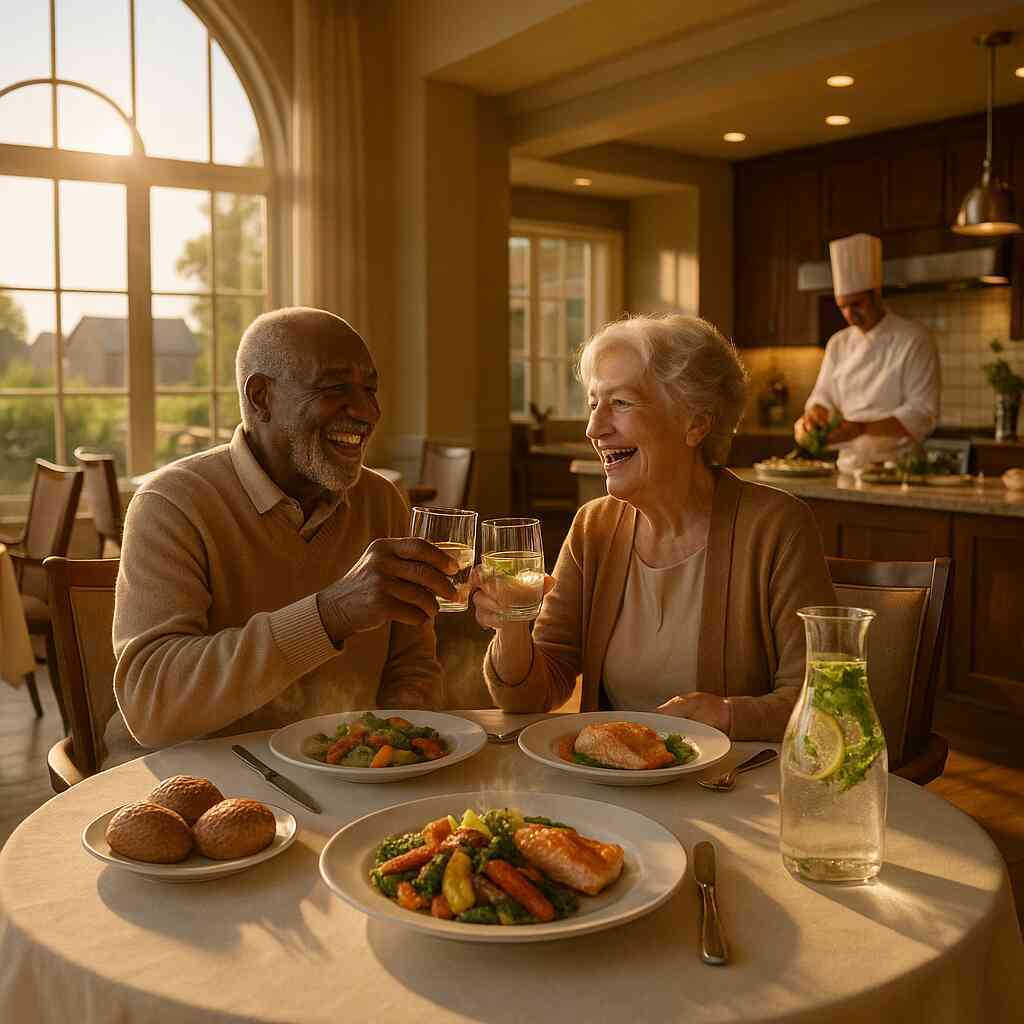
A Meal Is More Than Calories
When older adults move into a senior living community, they give up a home kitchen but not their right to satisfying meals. Food shapes daily rhythm, health, and social connection. That is why evaluating the dining program should sit near the top of any community checklist. This guide explains the factors that separate an ordinary cafeteria from a restaurant-style experience that truly supports aging well.
1. Registered Dietitian Oversight
A credentialed dietitian (RD or RDN) is the cornerstone of a safe and balanced menu.
- Reviews menus at least quarterly for protein adequacy, vitamin balance, and sodium control.
- Writes therapeutic plans (low-sodium, renal, diabetic, texture-modified) that align with physicians’ orders.
- Trains kitchen staff to portion correctly and prevent cross-contact between allergens or texture levels.
- Monitors weight trends and hydration logs so emerging problems get flagged early.
Tip: Ask to see the RD’s visit schedule and documentation template. Consistent chart reviews signal a mature nutrition program, not a token consult.
2. Menu Variety and Cultural Relevance
Older adults who ate diverse cuisines at home should not lose that pleasure in community life. A strong program offers:
- At least two entrée choices per meal, plus made-to-order alternatives.
- Rotating seasonal menus that highlight fresh produce, regional dishes, and holidays residents celebrate.
- Faith-based options such as kosher or halal menus prepared with separate equipment.
- Flavor-boosting techniques—herbs, citrus, slow roasting—so lower-salt plates still taste vibrant.
Browse a four-week cycle menu. If every Tuesday lunch is tuna sandwich, variety is lacking. If you see tacos one week, chicken shawarma the next, creativity is alive and well.
3. Safety for Special Diets and Swallowing Issues
Dignified dining means everyone can eat alongside friends.
- Pureed, minced, and soft diets prepared in a dedicated area, not blended leftovers.
- Liquids thickened to correct viscosity, labeled, and served promptly to maintain consistency.
- Clear allergen icons (dairy, nuts, gluten, shellfish) printed on menus and posted at serving stations.
- Staff trained annually in the International Dysphagia Diet Standardisation Initiative (IDDSI).
Observe lunch service. Residents on puree should receive meals plated attractively with molded shapes, not scoops that resemble baby food.
4. Dining Room Atmosphere
Nutrition is only half the story; ambiance drives appetite and mood.
- Tables for four to six people foster conversation without crowding.
- Soft lighting, uncluttered walkways, and background music from residents’ era reduce agitation.
- Flexible hours (e.g., 7–9 a.m. breakfast) respect individual routines.
- Server-style service rather than buffet lines for those using walkers or wheelchairs.
Visit during a peak mealtime. Are residents lingering, laughing, and greeting servers by name? That energy is hard to fake.
5. Staff Training and Hospitality Culture
Great food can be ruined by rushed or impersonal service.
- Culinary team holds food-service manager certificates (ServSafe or equivalent).
- All servers complete customer-service modules that emphasize eye contact and respectful language.
- Cross-training: caregivers know dining protocols so they can safely assist when a resident needs help midsentence.
- Low turnover rates; familiar faces build trust and remember coffee preferences.
Ask how new hires are onboarded. A one-day orientation is not enough for complex diets and mobility challenges.
6. Continuous Quality Improvement
Top communities treat feedback as fuel for growth.
- Monthly resident food councils that review upcoming menus and vote on theme nights.
- Comment cards collected at each meal and tallied for trends.
- Quarterly satisfaction surveys shared with the entire community, not hidden in management files.
- Partnerships with local farms or fisheries that publish sourcing lists—transparency breeds accountability.
Request meeting minutes or survey summaries. Seeing resident quotations and action steps shows the process is active, not performative.
7. Key Questions to Ask on a Tour
- How often does the RD adjust menus, and do residents meet the RD directly?
- Can you accommodate my parent’s need for a gluten-free pureed diet today, not next week?
- What is the average protein offered per lunch entrée?
- How are allergens labeled, and how do you prevent cross-contact in the kitchen?
- Do residents have access to snacks or hydration stations outside scheduled meals?
- What was the last change made because of resident feedback?
Take notes and compare answers across communities. Inconsistent or vague responses are red flags.
Putting It All Together
A powerful dining program nourishes body, mind, and spirit. It requires clinical insight, culinary skill, warm hospitality, and a feedback loop that never stops turning. When these elements align, mealtime becomes a highlight, not a hurdle, and residents gain both health and joy.
Approach tours with a tasting mindset: look, smell, listen, and question. The community that treats every plate as an opportunity for dignity and delight is the one most likely to support thriving later life.
Evaluate Senior Living Facilities Dining Program Quality


Comments
Post a Comment